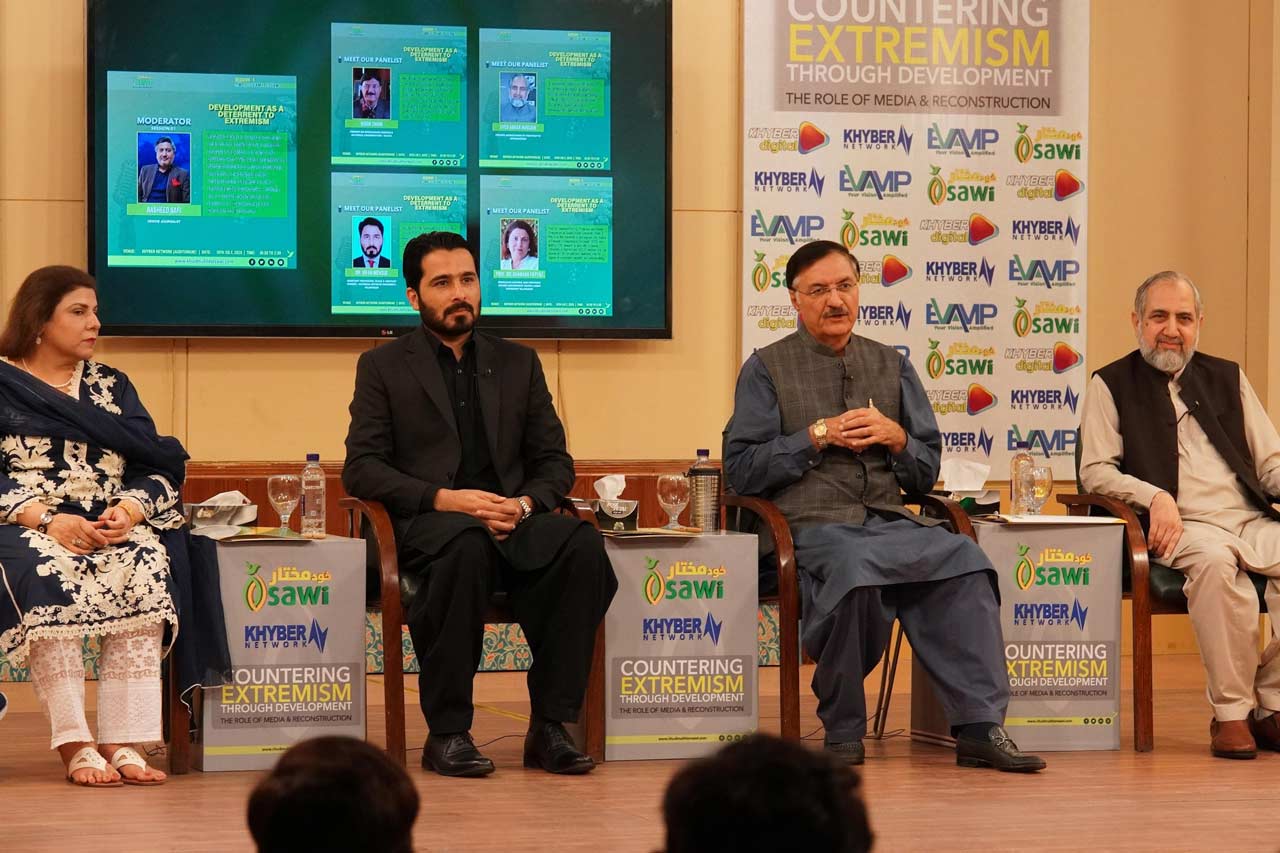
Countering Extremism Through Development: The Role of Media & Reconstruction
Extremism does not grow in isolation. It often takes root where communities face poverty, displacement, weak governance, lack of education, unemployment, poor infrastructure, and limited access to trustworthy information. In Pakistan, especially in Khyber Pakhtunkhwa, the challenge of extremism has been deeply connected to decades of conflict, border instability, underdevelopment, and social disruption.
Countering extremism through development means addressing the conditions that allow extremist narratives to spread. Security operations may be necessary in certain situations, but long-term peace requires more than force. It requires schools, roads, healthcare, jobs, justice, media awareness, public trust, and reconstruction of communities affected by violence.
Khyber Pakhtunkhwa, particularly the merged districts formerly known as FATA, has experienced terrorism, military operations, displacement, destroyed homes, damaged livelihoods, and slow institutional transition. The merger of former FATA into KP created an important opportunity to bring constitutional rights, local governance, rule of law, and development to millions of people. UNDP describes the KP-FATA merger as a historic opportunity to stabilize the region, while also warning that delays or mismanagement can create space for counter-narratives and instability.
This is why media and reconstruction are so important. Media shapes public understanding, builds awareness, counters misinformation, and gives voice to local communities. Reconstruction restores dignity, creates economic opportunity, and shows people that the state and society have not forgotten them. Together, media and development can become powerful tools for peacebuilding in Pakistan.
Understanding Extremism in the Context of Khyber Pakhtunkhwa
Khyber Pakhtunkhwa has a unique position in Pakistan’s security and development landscape. It shares a long border with Afghanistan, has hosted displaced populations, and has been affected by militant activity for many years. Areas such as North Waziristan, South Waziristan, Khyber, Kurram, Bajaur, Mohmand, Orakzai, and other parts of KP have faced cycles of instability that disrupted normal life.
Extremism in such regions is not only a security issue. It is also a social, economic, psychological, and communication issue. When young people do not see a clear future, extremist groups can exploit frustration. When people lack access to quality education, misinformation becomes easier to spread. When roads, schools, hospitals, courts, and police systems are weak, citizens may lose trust in formal institutions.
The merged districts of KP are especially important because they are still going through a long transition. The extension of constitutional rights, formal policing, local government, and courts is a major step, but people also expect visible improvements in daily life. Roads must be rebuilt. Schools must function. Health facilities must be accessible. Jobs must be created. Land rights must be clear. People must feel that development is real, not just promised.
The federal government’s release of a major funding package of about PKR 35.968 billion in 2025 under the Accelerated Implementation Programme for KP’s merged districts shows that reconstruction and development remain central to long-term stability.
Why Development Is a Counter-Extremism Strategy
Development counters extremism by reducing vulnerability. It gives people alternatives to violence, strengthens trust in institutions, and helps communities move from survival mode toward progress.
A young person with access to education, technical training, internet, sports, and employment is less vulnerable to extremist recruitment than someone who feels abandoned. A family with access to healthcare, clean water, and safe roads is more likely to trust peaceful systems. A community with functioning local government and transparent public services is less likely to depend on informal or violent actors.
Development is also psychological. When people see their village rebuilt, their school reopened, or their market connected to a larger city, it sends a message: peace has value, and the future can be better.
In KP, development must be practical and visible. Large policy statements are not enough. People need to see working schools, repaired bridges, medical staff in clinics, police stations that serve citizens respectfully, and local jobs that allow families to survive with dignity.
The Role of Reconstruction in Restoring Trust
Reconstruction is not only about buildings. It is about restoring public confidence. In areas affected by conflict, reconstruction becomes a symbol of recovery. A rebuilt school tells children that learning matters. A repaired road connects farmers to markets. A functioning hospital tells families that life is valued. A restored marketplace brings back local economic activity.
In KP and the merged districts, reconstruction must focus on both physical infrastructure and social infrastructure. Physical infrastructure includes roads, bridges, schools, health centers, electricity, water systems, housing, and markets. Social infrastructure includes governance, justice, policing, education quality, women’s participation, youth engagement, media literacy, and community dialogue.
People who have lived through conflict often carry trauma. Reconstruction should therefore include mental health support, community healing, and programs for youth who grew up around violence. Extremism cannot be defeated only by rebuilding walls. It must also be addressed by rebuilding hope.
Media as a Tool Against Extremist Narratives
Media plays a major role in shaping how people understand conflict, identity, religion, politics, and development. In regions affected by extremism, misinformation can spread quickly, especially through social media, local rumors, and emotional propaganda.
Extremist groups often use simple messages. They present themselves as defenders of justice, religion, or local rights. They exploit anger over corruption, poverty, foreign influence, or state neglect. If communities do not have access to balanced, credible information, these narratives can become powerful.
Responsible media can counter this by doing three things.
First, media can expose the real cost of extremism. It can show how violence destroys schools, businesses, families, mosques, markets, and the future of young people.
Second, media can highlight positive development stories. When a school opens in a merged district, when a road improves trade, when a young woman starts a business, or when local police become more community-focused, these stories matter. They show that peaceful progress is possible.
Third, media can create space for local voices. People in KP should not only be discussed by outsiders. They should be heard directly. Tribal elders, teachers, youth leaders, women, business owners, journalists, religious scholars, and civil society workers should be part of the conversation.
UNDP’s work in the merged areas has included media monitoring, public feedback channels, and efforts with civil society and journalists to counter fake news and educate stakeholders. This shows how media can support governance and peacebuilding when used carefully.
The Importance of Local Journalism in KPK
Local journalists in Khyber Pakhtunkhwa are extremely important because they understand the language, culture, geography, and fears of the people. National media often focuses on major attacks or political statements, but local journalists can tell deeper stories about daily life, reconstruction, education, healthcare, unemployment, and community resilience.
However, local journalism in conflict-affected areas can be dangerous. Journalists may face threats from militants, pressure from authorities, financial hardship, and limited access to training. Supporting local journalism should be part of Pakistan’s counter-extremism strategy.
This support can include safety training, digital security, fact-checking resources, ethical reporting workshops, and financial support for independent local reporting. Local media should be encouraged to report not only on violence, but also on development gaps, corruption, public service delivery, and successful community initiatives.
When local journalism becomes stronger, extremist propaganda becomes weaker.
Media Literacy: Teaching People to Recognize Manipulation
Countering extremism also requires media literacy. People must learn how to identify fake news, emotional manipulation, sectarian messaging, and propaganda.
In Pakistan, social media platforms are widely used by young people. Extremist messaging can spread through short videos, forwarded messages, edited clips, fake religious claims, and conspiracy theories. Many people share content without verifying it.
Media literacy programs in schools, colleges, madrassas, universities, and community centers can help young people ask important questions: Who created this message? What is the source? Is it trying to create anger? Is it dividing people? Is it using religion for violence? Is there evidence?
In KPK, media literacy should be available in local languages and adapted to local realities. It should not feel like a lecture from outsiders. It should be community-based, respectful, and connected to real examples.
Education as the Foundation of Peace
Education is one of the strongest tools for countering extremism. But education must be more than enrollment numbers. It must be quality education that teaches critical thinking, tolerance, civic responsibility, digital literacy, and practical skills.
In conflict-affected areas, schools may have been damaged, closed, or under-resourced. Girls’ education has often faced additional barriers due to security concerns, poverty, distance, and cultural restrictions. Rebuilding schools and training teachers should be a top priority.
Education also needs to connect with employment. If young people study but still see no job opportunities, frustration remains. Vocational training, technical education, IT skills, agriculture training, construction skills, small business support, and digital freelancing programs can give youth practical pathways.
A peaceful society is not built only by telling youth to reject extremism. It is built by giving them something better to choose.
Economic Opportunity and Youth Employment
Unemployment is one of the biggest vulnerabilities extremists can exploit. When young people feel ignored, hopeless, or unable to support their families, they become easier targets for radical networks.
Khyber Pakhtunkhwa has enormous potential. It has agriculture, minerals, tourism, trade routes, small businesses, youth talent, and cultural strength. But many areas need infrastructure, investment, training, and market access.
Development programs should focus on local economic realities. In some areas, agriculture and livestock support may be most useful. In others, construction jobs, transport, trade, tourism, or digital skills may create better opportunities. Small business grants, microfinance, vocational centers, and public-private partnerships can help.
Reconstruction itself can create jobs. Roads, schools, hospitals, water systems, and housing projects should hire local workers whenever possible. This gives people income while also building community ownership.
Rule of Law and People-Centered Policing
Development cannot succeed without justice and security. People must feel protected by the law, not afraid of it. In the merged districts, the transition to formal policing and justice systems is a major part of long-term peace.
The launch of the first policing plans for KP’s merged areas in 2022, supported by KP Police, Japan, and UNDP, focused on seven districts: Bajaur, Mohmand, Khyber, Orakzai, North Waziristan, South Waziristan, and Kurram. These plans aimed to support the transition toward formal policing and justice systems while promoting people-centered policing and stronger community partnerships.
This approach matters because extremism often grows where people feel there is no justice. If citizens cannot resolve disputes fairly, if they fear abuse, or if institutions are absent, extremist groups may try to fill the vacuum.
People-centered policing means police are trained, accountable, locally aware, and connected to communities. It means citizens can report problems without fear. It means security is not only about force, but also about trust.
Religious Leaders and Community Messaging
Pakistan is a deeply religious society, and religious leaders have an important role in countering extremism. Extremist groups often misuse religious language to justify violence. Responsible scholars, imams, and teachers can challenge these distortions.
In KPK, religious messaging should promote peace, mercy, education, respect for human life, and community responsibility. Friday sermons, madrassa discussions, local radio, and community gatherings can all be used to promote anti-violence messages.
However, religious leaders should not be used only as symbolic figures. They should be included in serious conversations about youth, education, social problems, and local development. When religious leaders, educators, journalists, and civil society work together, communities become more resilient.
Women’s Role in Peacebuilding
Women are often among the most affected by conflict, but they are also powerful agents of peace. Mothers, teachers, health workers, social organizers, and entrepreneurs can identify early signs of radicalization and help guide young people toward positive paths.
In many parts of KPK, women face barriers to public participation. Development programs must respect local culture while still expanding women’s access to education, healthcare, skills training, and economic opportunity.
Women-led development creates long-term stability. When women are educated and economically active, families become stronger. Children are more likely to attend school. Health outcomes improve. Community resilience increases.
Countering extremism through development must include women—not as an afterthought, but as a central part of the solution.
Digital Media and the Battle for Young Minds
The internet has changed how extremist narratives spread. Young people are exposed to content through Facebook, TikTok, YouTube, WhatsApp, Telegram, and other platforms. Some of this content is religious, political, emotional, or identity-based. Some of it is designed to create anger and division.
Pakistan needs stronger digital counter-narratives. These should not be boring government messages. They should be creative, youth-focused, and emotionally powerful.
Videos, podcasts, short documentaries, local success stories, interviews with survivors, religious explanations against violence, and stories of reconstruction can all help. Young people need content that speaks their language and respects their experiences.
In KPK, digital campaigns should highlight local heroes: teachers who kept schools open, doctors serving remote areas, young entrepreneurs, athletes, students, journalists, and community volunteers. These stories can compete with extremist messaging by offering pride without violence.
Reconstruction Must Be Transparent
One major challenge in development work is public trust. If people believe funds are misused, projects are delayed, or promises are broken, frustration grows. Extremist groups can then use that frustration for propaganda.
This is why reconstruction must be transparent. Communities should know which projects are approved, how much funding is allocated, who is responsible, and when work will be completed. Media can help by tracking progress and asking fair questions.
Public dashboards, local consultation meetings, radio updates, and social media reporting can improve transparency. Citizens should be able to report problems, delays, or corruption. Development should not be something done “to” communities. It should be done “with” communities.
A Practical Development Model for KPK
A strong counter-extremism development model for Khyber Pakhtunkhwa should include several connected priorities.
First, rebuild essential infrastructure: schools, hospitals, roads, water systems, electricity, and communication networks.
Second, strengthen education and vocational training, especially for youth in merged districts and conflict-affected areas.
Third, support local journalism and media literacy so communities can resist misinformation and extremist propaganda.
Fourth, create local jobs through reconstruction, agriculture, tourism, small business support, and digital skills training.
Fifth, improve policing, courts, and dispute resolution so people trust formal institutions.
Sixth, involve religious leaders, women, youth, teachers, and elders in peacebuilding.
Seventh, make development transparent so citizens can see progress and hold institutions accountable.
This model recognizes that extremism is not only defeated by security pressure. It is defeated by building a society where extremist narratives no longer feel attractive or believable.
The Future of Peace in Khyber Pakhtunkhwa
Khyber Pakhtunkhwa has suffered deeply, but it also has tremendous strength. Its people have shown resilience through conflict, displacement, economic hardship, and political uncertainty. The future of KPK depends on whether development can reach the people who need it most.
Media and reconstruction must work together. Media should inform, educate, expose misinformation, and highlight progress. Reconstruction should restore services, create jobs, rebuild trust, and give communities a stake in peace.
For Pakistan, countering extremism through development is not just a policy choice. It is a national necessity. A peaceful KPK means a stronger Pakistan. A developed merged district means a weaker extremist narrative. A young person with education, employment, and dignity is one less person vulnerable to violence.
The path is not easy. Development takes time. Trust takes time. Reconstruction takes time. But every rebuilt school, every honest news report, every trained young worker, every functioning health center, and every peaceful community meeting is part of the solution.
Extremism thrives where hope disappears. Development brings hope back.