The New Frontline: Welfare, Climate Action, and Preventing Violent Extremism
Introduction
In today’s rapidly changing world, communities are facing challenges that are deeply connected. Poverty, unemployment, displacement, climate change, lack of education, social instability, and violent extremism can no longer be treated as separate issues. Each one affects the other, creating complex problems that require thoughtful, collective, and long-term solutions.
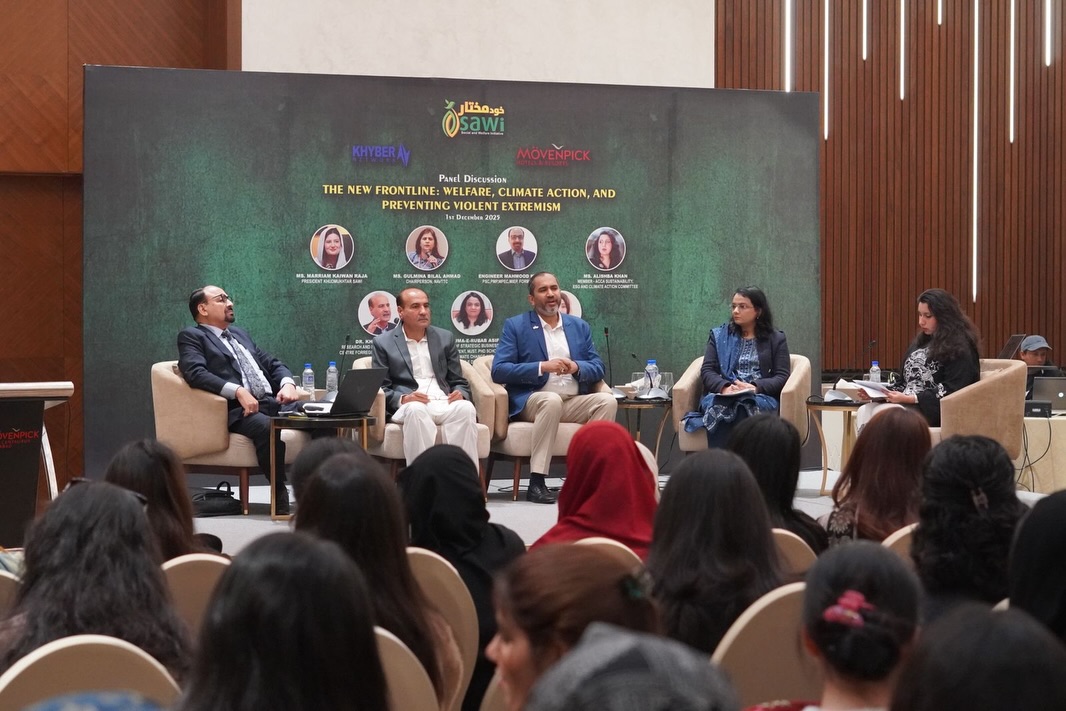
Recognizing this urgent need, KhudMukhtar Sawi organized an important event titled “The New Frontline: Welfare, Climate Action, and Preventing Violent Extremism.” The event served as a meaningful platform to highlight how social welfare, climate action, and peacebuilding are closely linked. It brought together voices from different sectors to discuss how communities can be protected, empowered, and prepared for a more peaceful and sustainable future.
The theme of the event reflected a powerful reality: the frontline of security is no longer limited to borders, weapons, or traditional law enforcement. The new frontline exists within communities. It is found in schools, neighborhoods, villages, urban settlements, media platforms, welfare programs, and climate-affected regions. It is shaped by how societies respond to hardship, vulnerability, environmental stress, and social exclusion.
This blog explores the key ideas behind the event and explains why welfare, climate action, and preventing violent extremism must be addressed together.
Understanding the New Frontline
The phrase “The New Frontline” represents a modern understanding of peace and security. In the past, discussions around extremism and conflict often focused mainly on ideology, policing, or military response. While security measures remain important, they are not enough on their own.
Violent extremism often grows in environments where people feel ignored, powerless, hopeless, or disconnected from society. When communities face poverty, lack of opportunity, displacement, climate disasters, and weak social support, they become more vulnerable to instability. Extremist groups may exploit these conditions by offering false promises, identity, financial support, or a sense of belonging.
This is why welfare and climate action are essential parts of preventing violent extremism. A community with access to education, livelihood support, disaster preparedness, healthcare, awareness, and social inclusion is more resilient. Such communities are better able to resist harmful narratives and build peaceful futures.
KhudMukhtar Sawi’s event emphasized that the new frontline is not just about responding to crises after they happen. It is about preventing them by addressing the root causes that make communities vulnerable in the first place.
The Connection Between Welfare and Preventing Violent Extremism
Social welfare plays a critical role in creating stable and peaceful societies. Welfare does not only mean financial assistance. It includes education, health support, vocational training, livelihood programs, food security, shelter, psychological support, and community development.
When people have access to basic needs and opportunities, they are more likely to feel included and hopeful. When those needs are missing, frustration and vulnerability can increase. This does not mean poverty automatically leads to extremism, but economic hardship can create conditions where extremist narratives become easier to spread.
For example, young people without education, employment, or future prospects may feel abandoned by society. Families affected by displacement or disaster may struggle to rebuild their lives. Communities lacking basic infrastructure may feel neglected. These conditions can create anger, mistrust, and instability.
Welfare programs help reduce these risks by strengthening human dignity and social protection. They give people practical support and restore confidence in community systems. By addressing poverty, unemployment, and social exclusion, welfare becomes an important tool for preventing violent extremism.
KhudMukhtar Sawi’s work reflects this approach by focusing on vulnerable populations and promoting development-based solutions. Instead of only looking at symptoms, the organization highlights the importance of addressing the social conditions that contribute to unrest.
Climate Change as a Humanitarian and Security Challenge
One of the most important messages from the event was that climate change is not only an environmental issue. It is also a humanitarian, economic, and security challenge.
Climate change affects water availability, agriculture, food prices, migration patterns, public health, and livelihoods. In regions where communities already face poverty or weak infrastructure, climate-related disasters can make life even more difficult.
Floods, droughts, heatwaves, changing rainfall patterns, and natural disasters can destroy homes, damage crops, reduce income, and force families to migrate. These impacts can create social stress and competition over limited resources. When people lose their livelihoods and feel unsupported, communities may become more vulnerable to conflict and unrest.
In Pakistan, and especially in climate-sensitive regions, these challenges are very real. Communities affected by floods, displacement, and economic hardship often need more than emergency relief. They need long-term rehabilitation, livelihood restoration, education, healthcare, and climate resilience programs.
The event highlighted that climate action must be viewed as part of peacebuilding. Protecting the environment, preparing communities for disasters, and supporting climate-affected families can help reduce insecurity. When climate action is combined with welfare and community development, it becomes a powerful tool for preventing future instability.
Why These Challenges Cannot Be Addressed Separately
A major theme of the event was that welfare, climate action, and preventing violent extremism are interconnected. Treating them separately can limit the effectiveness of solutions.
For example, a climate disaster can create displacement. Displacement can increase poverty. Poverty can reduce access to education. Lack of education and opportunity can increase vulnerability to harmful narratives. If only one part of the problem is addressed, the larger cycle may continue.
This is why a multidimensional response is necessary. Communities need support that combines immediate relief with long-term development. They need awareness campaigns, youth engagement, vocational training, climate adaptation, media responsibility, and local leadership.
A strong response should include:
Social welfare to protect vulnerable families and restore dignity.
Climate action to reduce environmental risks and build resilience.
Education and awareness to counter misinformation and extremist narratives.
Livelihood support to create economic opportunity.
Community engagement to build trust and cooperation.
Media involvement to promote responsible communication and public understanding.
By bringing different sectors together, KhudMukhtar Sawi’s event encouraged a more complete and practical approach to modern challenges.
The Role of Community Resilience
Community resilience means the ability of a community to withstand, respond to, and recover from difficult situations. A resilient community is not only strong during emergencies but also prepared before crises occur.
Resilience is built through education, trust, cooperation, awareness, and access to resources. It requires strong local leadership, active citizens, and supportive institutions. When people feel connected to their communities, they are more likely to work together during difficult times.
Preventing violent extremism depends heavily on community resilience. Extremist narratives often target people who feel isolated, angry, or hopeless. Strong communities can challenge these narratives by offering belonging, opportunity, and positive identity.
Climate resilience is equally important. Communities that understand climate risks and have plans for disaster response are better able to protect lives and livelihoods. This reduces panic, displacement, and long-term insecurity.
The event emphasized that empowering communities is one of the most effective ways to build peace. Communities should not only be seen as victims of crisis but as active partners in creating solutions.
The Importance of Youth Engagement
Young people are central to the future of peace, climate action, and social development. They are often the most affected by unemployment, lack of opportunity, and social instability. At the same time, they are also powerful agents of change.
When youth are given education, skills, leadership opportunities, and platforms for expression, they can become builders of peace. They can lead awareness campaigns, support climate initiatives, promote social harmony, and challenge extremist narratives.
However, when young people are excluded or ignored, they may become vulnerable to frustration and manipulation. This makes youth engagement an essential part of preventing violent extremism.
Programs that focus on vocational training, entrepreneurship, digital skills, civic education, and climate awareness can help young people build meaningful futures. These programs also strengthen the wider community by reducing unemployment and increasing participation.
KhudMukhtar Sawi’s event highlighted the need to invest in youth not only as beneficiaries but as leaders. Young people must be included in discussions about welfare, climate action, and peacebuilding because they will shape the direction of future communities.
The Role of Media in Awareness and Prevention
Media plays a major role in shaping public understanding. It can either spread fear and division or promote awareness, responsibility, and unity. In the context of climate change and violent extremism, responsible media is extremely important.
Media can help communities understand the causes and effects of climate change. It can highlight the struggles of vulnerable groups and bring attention to welfare needs. It can also counter misinformation and harmful narratives that contribute to extremism.
However, sensational reporting can sometimes create panic or deepen divisions. This is why media professionals must approach sensitive issues carefully. They should focus on facts, human stories, solutions, and community empowerment.
The event brought attention to the role of media as a partner in development and peacebuilding. By promoting informed dialogue, media can help people understand that social welfare, climate action, and preventing violent extremism are shared responsibilities.
A responsible media approach can inspire public action, encourage donations, support policy change, and give visibility to grassroots organizations working on the ground.
Climate Action and Livelihood Protection
Climate action must go beyond awareness. It should include practical steps that protect people’s livelihoods. Many vulnerable communities depend on agriculture, daily wage work, small businesses, and natural resources. When climate change disrupts these sources of income, families can fall deeper into poverty.
Livelihood protection is therefore a key part of climate resilience. This may include vocational training, small business support, sustainable agriculture, disaster-resistant infrastructure, clean water access, and emergency preparedness.
When people have stable income and resources, they are less vulnerable to exploitation and unrest. Economic stability creates confidence and reduces desperation. It also strengthens families and communities.
This is where welfare and climate action meet. Welfare provides immediate support, while climate action helps reduce future risks. Together, they create a foundation for long-term peace and development.
KhudMukhtar Sawi’s event encouraged the idea that climate action should be human-centered. It should focus not only on protecting the planet but also on protecting people, especially those most at risk.
Preventing Violent Extremism Through Development
Development is one of the most effective long-term strategies for preventing violent extremism. When communities have access to schools, jobs, healthcare, infrastructure, and social support, they are better able to resist instability.
Development creates hope. It gives people reasons to invest in their future. It also strengthens trust between communities and institutions.
Preventing violent extremism through development does not mean ignoring security concerns. Rather, it means understanding that security is stronger when communities are supported. Law enforcement may respond to threats, but development helps reduce the conditions that allow threats to grow.
This approach includes:
Education that promotes critical thinking and tolerance.
Economic opportunities that reduce frustration.
Community programs that build trust and inclusion.
Climate resilience that protects livelihoods.
Awareness campaigns that challenge harmful narratives.
Mental health and psychosocial support for affected populations.
By connecting these elements, organizations can create stronger prevention strategies. KhudMukhtar Sawi’s event successfully promoted this broader understanding of peace and security.
Collective Action as the Way Forward
No single organization, sector, or community can solve these challenges alone. Welfare, climate action, and preventing violent extremism require collective action.
Government institutions, civil society organizations, media groups, educators, religious leaders, climate advocates, youth leaders, donors, and local communities all have important roles to play.
Collaboration allows different groups to bring their strengths together. Welfare organizations understand community needs. Climate experts understand environmental risks. Media professionals can spread awareness. Educators can shape young minds. Local leaders can build trust. Policymakers can support long-term change.
The event created a platform for this kind of collaboration. It encouraged dialogue across sectors and promoted the idea that peacebuilding must be shared work.
Collective action is especially important because the challenges are urgent. Climate change is already affecting communities. Economic hardship continues to create pressure. Misinformation spreads quickly. Violent extremism remains a threat in vulnerable spaces.
A united response is not optional. It is necessary.
Building a Peaceful and Sustainable Future
A peaceful future depends on how societies respond to today’s challenges. If climate change, poverty, displacement, and social exclusion are ignored, instability may increase. But if communities are supported, empowered, and included, they can become strong foundations for peace.
KhudMukhtar Sawi’s event showed that the path forward must be practical, compassionate, and inclusive. It must focus on people’s real needs while also addressing larger global issues.
Welfare programs can restore dignity. Climate action can protect livelihoods. Education can create awareness. Media can guide public understanding. Community development can build resilience. Together, these efforts can reduce the risks of violent extremism and create stronger societies.
The event’s message was clear: the future of peace is connected to the future of development. We cannot build security without addressing human suffering. We cannot protect communities without protecting the environment. We cannot prevent extremism without creating hope.
Conclusion
“The New Frontline: Welfare, Climate Action, and Preventing Violent Extremism” was more than an event. It was a timely reminder that modern challenges require modern solutions.
Organized by KhudMukhtar Sawi, the event highlighted the growing connection between social welfare, climate change, and violent extremism. It emphasized that these issues must be addressed together through community empowerment, awareness, collaboration, and long-term development.
As environmental instability, economic hardship, and social vulnerability continue to affect communities, the need for collective action becomes even more urgent. Climate change is not only about weather patterns. Welfare is not only about aid. Preventing violent extremism is not only about security. All three are connected through the lived experiences of people.
The new frontline is where communities struggle, adapt, and rebuild. It is where hope must be protected. It is where organizations, leaders, media, and citizens must work together.
By investing in welfare, supporting climate action, and strengthening community resilience, societies can move toward a future that is safer, fairer, and more sustainable.